Friday, April 8, 2011

Who will save China? Part 2

There's a few things I didn't cover in my last post on China, so here is part 2...

On Australian SBS show 'Dateline', there was a piece on "China's Ghost Cities"


Related to video above, Business Insider reported in late 2010:
"There Are Now Enough Vacant Properties In China To House Over Half Of America"
Recent statistics show that there are about 64 million apartments and houses that have remained empty during the past six months, according to Chinese media reports. On the assumption that each flat serves as a home to a typical Chinese family of three (parents and one child), the vacant properties could accommodate 200 million people, which account for more than 15% of the country’s 1.3 billion population. But instead, they remain empty. This is in part because many Chinese believe that a home is not a real home unless you own the flat.

And so people prefer buying to renting, and as a result, the rental yield is relatively low.

Consultancy firm McKinsey's believe this trend will continue with China expected to build 50,000 skyscrapers in the next 20 years. The figures translate to 2,500 skyscrapers each year, more than 200 every month, almost 50 a week. (The definition of a skyscraper is a build at least 80 metres tall)


Satellite Images Of The Ghost Cities Of China

"There’s city after city full of empty streets and vast government buildings, some in the most inhospitable locations. It is the modern equivalent of building pyramids. With 20 new cities being built every year, we hope to be able to expand our list going forward."


Chinese Property Charts
source: Business Insider
Outstanding real estate developer loans are up 50% in two years

Price Spike - home prices in Haikou have jumped 54% in one year

Nationwide there has been a 140% house price rise from 2007 to beginning of 2010

Price to Income

Price to Rent

A sign of systemic risk: local governments now rely on land auctions for revenue


China's State-owned enterprises (SOEs) are the leading cause of over investment in property


China's SOEs

Property Developers in bed with Government is a recipe for disaster (just ask New South Wales Labor!). In China about 50 per cent of local government revenues come from property development. In other words, in China (and to some degree in other countries like Australia), local, state and Federal Government is addicted to property development to fund Government budgets.

As John Lee states
The favouring of SOEs (and suppression of the domestic private sector through capital deprivation) is a key pillar of how the Communist Party maintains its economic dominance and relevance at grassroots levels.

To put some numbers on China's property growth,
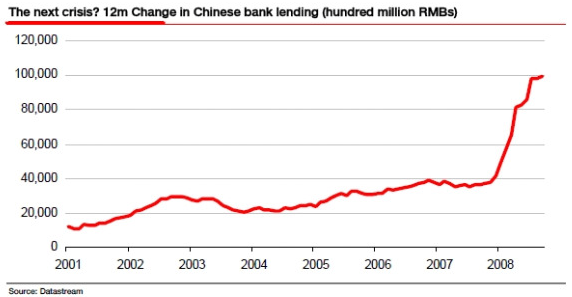
bank lending of domestic fixed-asset investment, expanded from US$750 billion in 2008 to US$1.4 trillion in 2009 and US$1.2 trillion in 2010. The 2011 target is US$1.1 trillion. Despite weekly direcectives by Government officials, Chinese banks lent an estimated US$220 billion in January (2011) alone. Three-quarters of the capital goes to state-owned enterpises (SOEs) overseen by thousands of local bank branches.


As I've stated several times previously, all property bubbles eventually burst. China's bubble is unrepresented and makes the US sub-prime property bubble look like a grain of sand on the beach.


China's Inflationary clampdown

Inflation is becoming more prevelant worldwide as the US floods the world with paper dollars, and national governments embrace debt to uphold promoised social security systems.

In China, Neils Jensen, from London-based Absolute Return Partners, argues that China is "massaging" its numbers.
"Official figures show that inflation eased 4.6 per cent in December 2010, from November's 5.1 per cent, but anecdotal evidence suggests the actual inflation rate. particularly in the big cities, is running closer to 20 per cent.

What's more, the Chinese have also taken the extraordinary step of reducing the weight of food in the consumer price index - at a time when sharp rises in food prices mean that households are likely to be spending even more of their income on food.

"when the Chinese ultimately bite the bullet and force the economy to slow down meaningfully (and I believe it is a question of when, not if), the biggest victim is likely to be commodity prices, and none more so than base metal prices, which in recent years have been highly correlated to the fortunes of China."
source: Business Spectator

On 4 April 2011 it was reported that the Chinese government was putting direct pressure on major companies to resist passing on inflationary pressures to consumers. ie. the Chinese government is increasingly relying on administrative price controls to stop inflation (but these will never work!)

Last week, Chinese shoppers emptied supermarket shelves of items such as shampoo, soaps, and even instant noodles, after state-owned media reported that major companies - including Unilever and Procter & Gamble - were planning to lift prices by 5 and 15 per cent from the beginning of April.

Alarmed by the reaction, the National Development and Reform Commission (NDRC) – the country’s economic planning agency – contacted the companies, urging them to exercise price restraint.

Other Chinese companies including Liby, a leading detergent producer, and Tingyi, which produces half of China’s instant noodles, also agreed to delay planned price rises.

The Chinese authorities are clearly worried that rising prices – particularly for essential goods such as food – could trigger increasing social and political unrest. Food prices rose 11 per cent in the year to February, more than twice the 4.9 per cent in the overall consumer price index.
source: Business Spectator

Place your bets. China is in trouble for ignoring basic economic laws. Like gravity, they cannot be defied through government decree.

~ Scott

Saturday, November 20, 2010

Who will save China?

In few months its become apparent that more and more reporters are jumping on the “China is vulnerable after all” bandwagon. I have had this view for some time now, and this post will examine a few reasons why China is as-vulnerable as many other countries in the world. Australia is very vulnerable because we are so reliant on China and commodity prices.

The Chinese Miracle?

The growth of China's economy in the last 15 years is nothing short of a "miracle". Compared to the other miracle economies, the 4 Asian tiger economies up to the 1990s and more recently the Celtic Tiger (Ireland - the roaring tiger of Europe - look where it is today!), China is in a completely new ball park. No country in history has built so much stuff in such a short space of time. World production of materials is mind-boggling. China can do it all, and in turn is de-industrialising higher-cost manufacturing in the western world. Demand for iron ore, coal, copper right down to steel and concrete has exploded. But can China perpetually build more and more steel mills and skyscrapers?

Well, no...

China is vulnerable to economic depression. The common denominator in every country is that all the banks operate under insolvent conditions, its just that the citizens rarely force a bank run to prove this Achilles’ heel. The main point here is, the common base line in every country today is the type of “money” used. The US Dollar, Australian Dollar, Chinese Renminbi and the Zimbabwe Dollar are all fiat currencies. Whilst there are significant differences in value of these currencies (or rather the rate of devaluation/loss of purchasing power), all currencies around today are still “fiat”, that is, money which is declared by Government to be legal tender and without intrinsic value (no gold backing). Through fractional reserve banking ("Money creation") and printing new money into existence the rate of economic growth in any country can be very rapid for a number of years. However, all good parties end in one big hangover. China's hangover is coming (particularly if they do not prepare for post US-Dollar monetary system).

Now that we have apparently coming through the worst of the so called Global Financial Crisis (GFC), every second economist on the street has hailed China as the world’s savour, and indeed in Australia, the Deputy Governor of the Reserve Bank of Australia RBA), Ric Battellino, believes the commodities boom could last for another 15 years – all of course, thanks to emerging economies of China and India.

Whilst I agree that China has helped the world during the GFC, and that we will continue to be in a long-term commodity boom, my reasons are completely different. And here is why:

• Chinese Banks inflated the world out of the 2007-2009 Global Financial Crisis
• The Commodity Boom over the next 10 years will be extremely volatile

Chinese Banks on steroids…

Answers to the future often lie in history. China invented paper money way back in the 10th Century AD. Every single paper-fiat currency created since (except for those existing today) have collapsed to a net worth of zero. Fiat currencies will always come and go because Government's cannot resist the temptation to use inflation to pay for election promises (or to help keep opposition parties out of government..). China, and every other country will not be able to defy economic reality with fiat currency this time around either. Keynesian economics will hopefully follow soon after.

As the following two graphs demonstrate, it’s the major global bank’s that fuelled the sub-prime bubble (in the US) which led to the GFC, and then subsequently it was Chinese stimulus spending and bank lending which helped the world get through the worst of the GFC. China just filled the void to get the world through the first phase of economic depression. This banking bubble is completely unprecedented. There is still many decades of debt still in the system - which is yet to be paid (accounted) for.

Chart 1: Global banking bubble
source: ABC News

Chart 2: Chinese banking bubble... but who will save the Chinese banks!?

The RMB¥ 4 trillion (US$ 586 billion) Chinese economic stimulus plan announced by the Chinese central government was all aimed at getting Chinese companies to build more Chinese goods and buildings. As I will explain a little bit on, China was already building at a very fast and unsustainable rate. This stimulus inevitably brought forward work and is now creating double digit inflation to their economy. Increasing credit always delays and make bubbles worse.

As consumer confidence was low in the US, and China, Japan and Asia were unable to keep exporting products to the US consumer, China took up the slack and increased bank lending dramatically, converting their economy from being strongly export-oriented (to the US) to fuelling domestic demand through stimulus. The Chinese Economic Stimulus Plan was used to offset the sub-prime housing crisis in the US to counter-act it with a Chinese property bubble. In essence, creating a new bubble market to replace a busting bubble market. The end result, I strongly believe, will have dire consequences to China, and Australia and the rest of the world. Like holding out a red flag to a charging bull, China will soon get caught out.

For now the commodity boom will continue, but… the next 10 years will be characterised by extreme volatile periods of double digit annual growth to significant periods of price deflation. Ultimately, gold, silver and soft commodities (food) will be sought after on-mass. People will change their spending habits to have economic security.


Construction, construction, construction!

Construction now makes up 60% of China's GDP. This compares to single digit GDP for China's total exports. China is building and manufacturing absolutely everything for the world, ten times over (or more?)

James Chanos:
No country has ever had done more than 9 years above 33% of GDP (in fixed assets – construction). China is now on its 12th or 13th year.


You gotta be in property! (especially if you are a central government)

In August this year the Financial Review ran an interesting article (lost on page 60) on China's central government trying to cool its property bubble. The article reported that all sorts of random companies were delving into property, from salt companies to railway companies. It goes on...
All around the nation, giant state-owned oil, chemical, military, telecom and high groups are bidding up prices on sprawling plots of land for big real estate projects unrelated to their core business. ...

By driving up property prices, the state-owned companies are working at cross-purposes to the central government's efforts to keep China's real estate boom from becoming a debt-driven speculative bubble.

Records show 82 per cent of land auctions in Beijing this year were won by big state-owned companies outbidding private developers - from 59 per cent in 2008.

Further:
land prices in Beijing had lept 750 per cent since 2003, and that half of tha gain had come in the past two years. Housing prices have also sky-rocketed, doubling in many cities over the past few years.

And as the prices of new apartments soar - in Shanghai, for instance, they often exceed $US 200,000, while the average disposable income isa bout $US 4,000 a year.

The article also made reference to the status of the state-owned banks. They they:
- had made $US 1.4 trillion in loans, nearly twice as much as the year before
- were making off-balance sheet manoeuvres
- were likely sitting on enormous unreported debt

Lastly, the article argues that different levels of government were behind the push in real estate because it was so "incredibly lucrative". Many municipalities have formed local investment vehicles that borrow from state-owned banks to pay to relocate citizens to build on their land, so the government can then auction off the new properties for profit.

Does this all sound like Sub Prime Mortgages on steroids times by a factor of 10?

Housing Affordability in China
One clear clue (regarding the rising real estate prices in China) is that the average price-to-income ratio in Beijing has reached 27:1, five times the world average, according to data from the Bureau of Statistics of the Beijing Municipality. In addition, the average price-to-rent ratio neared 500:1 in the city, far above the international alarm threshold of 300:1, which sends out a clear signal that the foundation of the real estate boom is losing stability.


Steel production up 6 fold in 10 years

To further put this into perspective, all this construction material had to come from somewhere. Of course, in Australia we know about the China boom and our record iron ore and coking coal sales have led to our highest terms of trade since the early 1950s.

Australia has helped fuel the great Chinese construction bubble. In 1999, the Chinese steel industry produced some 124 million tonnes of crude steel. This was a similar size to Japan and the United States. For comparison, in the same year Australia produced about 8 million tonnes. The following two charts illustrate the magnitude of China's construction mania.

Chart 3: China produced 16% of total world steel in 1999
source: World Steel Assoc. (public data)

Chart 4: 10 years later China now produces more than 46% of total world steel output
source: World Steel Assoc. (public data)

China’s steel production has gone up almost 6 fold in the last decade. To put this in perspective Australia’s steel production is now about 1% of China’s (or 0.5% of world) total annual steel production. ie. China produces Australia’s total annual steel production in just 5 days! China is now making more steel than what the entire world produced in around 1990.

To analyse this from another perspective, there are more stories in the media in recent years of ghost cities and empty mega malls springing up in parts of China.

Video: Fuelling the next housing crisis – this time in China

China also has the world’s largest shopping mall, the New South China Mall (based on leasable area) remains 99% vacant since opening in 2005. (video now unavailable)


Centrally planned economies do not work

Centrally planned economies have never worked over the longer term. I am not debating the nitty gritty of what the difference between communism vs. capitalism is, at the end of the day, the more intervention by Government’s and, particularly, central banks, the more mis-allocation of labour and capital there will be. The end result is massive overcapacity and ultimately price suppression (monopolistic behaviour on other countries). China is an extreme case at point, where the central government right down to municipal governments have had competing interests to increase employment at all costs. The municipal/provincial governments have also been competing for trophy industries, they all want to be the biggest and best at manufacturing, particularly steel and automobile industries. Exponential growth in credit, employment, and government intervention in markets eventually comes to an abrupt halt.

Far from what many economic commentators in Australia preach day in day out, that China is Australia’s economic savour amongst the global uncertainty in Europe and the US. To the contrary, I believe our over-reliance on China will ultimately bring harsh repercussions for Australia. On one side, China and the US will kill off the commodity boom. The biggest mining boom in history, inevitably will end in the biggest mining bust. The expansion plans of BHP Billiton, Rio Tinto, Fortescue Metals (among others) will result in major overcapacity, and empty ports. A huge call, perhaps crazy in today's climate, but this endless expansion will not keep going. Many of the major projects will be mothballed. Marginal projects will once again be marginal and left on ice for easy money to come around again.

James Chanos sums up the current situation rather nicely. James is best known for seeing the problems of Enron and shorting its stock up until its collapse. He recently warned that China's hyper-stimulated economy is headed for a crash, led by its housing bubble.
Its become very apparent... that China has embraced capitalism to keep the socialist elites entrenched, while more lately in the West we have embraced socialism to keep the capitalist elites entrenched. It’s a little bit of the opposite side of the same coin.

** Note ** I am soon to launch a new website at www.scottreeve.com, which will incorporate this blog and other areas of interest ~ Cheers, Scott

Thursday, May 27, 2010

The Great Australian (ponzi) Scheme

Back in February 2008, while the so-called GFC was taking hold I posted at length stating several reasons why I believed the Australian Housing (bubble) market was destined to burst. This post will extend on previous thoughts.

Raise your hand if your living the Great Australian Dream?

In past decades the Great Australian Dream became reality for many who rode the debt wave of the 1970s, 80s and 90s. The dream was an expression of financial security as nothing was "as safe as houses". Fast forward to today and Generations X, Y, and Z have little more than a pipe-dream of affordable living and affordable mortgages. We have to try to keep up with the Jones (Baby Boomers), or complain from outside (like i'm doing here). For now, some younger Australians may do well in the short term by embracing government first-home owner handouts, multi-decade low interest rates and other incentives to try to live the dream... and for now Australia is apparently defying gravity. I believe the dream will cause long term indigestion for some, for decades to come if people do not have a backup plan once asset deflation hits Australia on mass. Liquidity on hand will be king (gold/silver not Australian Dollars).


2009 – house prices hesitate and take off again.

Australian house prices ended up rising 1http://scottreeve.blogspot.com/2009/02/beware-australian-housing-debt-bubble.html, the fourth highest growth rate in the world behind Hong Kong, Mainland China, and Israel. However, globally house price deflation continues with house prices falling by 3.8 per cent, led by Ireland, Dubai and Eastern Europe. In my post last month, there is an excellent graph highlighting the next wave of delinquent mortgages on the way (1 in 7 trouble). China will follow, and i'll post more extensively on its problems.

Chart 1:
source: Australian Financial Review, March 2010

Chart 2: Australian house prices by city
source: ABS

Chart 3: The dip and the rebound...
source: ABS

The great Australian ponzi scheme continues upwards again. The combination between unprecedented population growth, low housing starts, government handouts, very low (central-bank manipulated) interest rates, and double-digit M3 inflation growth in the system (during the GFC period) ensured that there would be enough fuel to get more buyers into the Australian housing market. Externally, more and more money is coming from businessmen in China, India and elsewhere whom currently see Australia as a place to invest their savings for a return.

Lets examine each of these issues more closely.

A) unprecedented population growth

Chart 4: 300,000 to 400,000 net new people each year now... lets make the aging population problem (and hospitals) worse.
source: ABC News

Chart 5: Govt: "Even if there wasn't a "real" shortage... lets create one"...
source: ABC News

That's a lot more people that need to consume and a roof over their head. A lot more people that might be bringing valuable skills to Australia right now (a quick fix? ...), but eventually will also add to the hospital cues (and potentially unemployment ques when the economy goes pear shaped). The aging population is still aging!

B) Housing Starts manipulation

As the following graph demonstrates, the three levels of government have successfully been manipulating the supply-side of the housing market, by staging land releases. Arguably, the three levels of government in Australia are the most addicted to keeping Australian housing prices upright, and the most to loose when asset-deflation sets in. Primarily, strong price growth in housing equates to overall consumer confidence in the market, and ultimately confidence in government economic management. Further, local governments remain fixated on housing rates to raise revenue to spend on local roads, while revenue-deprived state governments grow increasingly reliant on land and stamp duty taxes. A blow in confidence in the housing market is a blow to government revenues (direct taxation), but ultimately a total decline in confidence will flow through to less employment (income tax), business profitability etc.

Chart 6: It's in Government interest to not flood the market with too much land...
source: ABC News (RBS data)


C) Government handouts – 1st homer owner loans

In the first stimulus package (A$10.4bn) announced in October 2008, the Rudd Government introduced a First Home Owners Boost to go onto of the First Home Owners Grant. With interest rates cut to four decade lows, this just added further candy to the honey pot to entice young Australians into the housing market. I'm a graph person, and I found the following interesting to decipher. Government's throwing money at problems just disrupts market behaviour. When the Government intervention is removed, the market goes back to levels before their intervened.

Chart 7:
source: Australian Financial Review (analysis added)


D) Very low interest rates

Unfortunately, the four decade low interest rates set by the Reserve Bank of Australia has encouraged more and more Australian to take on ever larger mortgages. Lowering interest rates has had a very significant influence on keeping Australia’s housing prices upright during the GFC and post-GFC period. If the RBA did not intervene in the market to lower interest rates (essentially adding more liquidity, more Dollars to the market), than many Australian’s would not have entered the housing market, or bought addition properties. The RBA is nothing more than a market manipulator, to manipulate investors decisions and to disrupt real market information.


E) Double-digit M3 inflation growth

In one of my first posts in September 2008, I talked about money supply growth and that it was growing at the fastest annual rate since the 1970s. This was in part due to the housing bubble that has continued. But the dip in housing between March 2008 and March 2009, the drop in confidence during the GFC period, the rise in unemployable and underemployment,, and the reduction in bank lending in Australia cooled M3 growth. Right now the annualised rate is back to 5.7 per cent. So the volatility continues. I expect M3 to grow strongly once again (similar to 1970s), and ultimately will go crazy as Government's get desperate to bail out certain industries... Inflation always has a 12-18 month time lag... so even though it may be growing more slowly now, the overall costs of living continue to rise. I don't see milk or rents going down..


Other interesting tid bits:

Steve Keen walks to Kosciuszko from Canberra


Where to from here?

May 2010, the sharemarket is looking shaky with the Dow Jones breaking back below 10,000 point level. Housing market quarterly growth continues in Australia for now... But I ask, what has structurally changed from 2-3 years ago? Structurally nothing has changed in the world since before, during and after the GFC. The United States only continues to live beyond its means because it has the world reserve currency, and can print its way out of trouble for now. Europe, Japan and others have held up until now because confidence in private and government debt has been suffice to keep the current ponzi-fiat-monetary system going. People are waking up to this, and volumes of gold, silver and other so-called "relics" sales are going through the roof (mint-door sales). Real estate markets worldwide continue to fall in local-currency prices - Hong Kong, Mainland China, Israel and Australia are still the exception... for now. Deleverage of over-inflated asset prices will continue (derivatives....), and many more AIG, Lehman's are around the corner - this time Government names will be added to the list (just not officially). Australia looks good for now, but this can quickly change over night. Putting all our eggs in the one basket - superannuation, real estate and relying on exporting commodities to China will inevitably cause major problems for us (Australia). China's centrally planned economy will blow up, they cannot spend, spend, spend, just like the US tried to do with retail consumption and sub-prime. Populating, (retail) consumption and inflating our way through the GFC appears on face-value to work, but it is only postponing our problems: Aging population, consuming the future today (we have no private savings), and increasing our costs of living by diluting our money supply. Now is the time to find value in markets....... I don't think the next 20 yrs will be like the last 20 yrs. Printing money can only cover up so much for so long...

The great Australian dream will turn out to be nothing more than the Great Australian Ponzi Scheme.

Scott

Thursday, April 29, 2010

Paying debt with debt: The US can't continue to fund its empire

The United States economy remains in terminal decline. The Federal Reserve continues to print (or rather adding extra zeros on a computer) US Dollars in a vein attempt to restore confidence back into the fiat-monetary system. In step, the US Government continues to live beyond its means and pay for defence, social security and healthcare with imaginary money, debt and deficits remain king.They (The Fed and US Govt), need to print at an unprecedented rate to cover existing debts, recent debts that have been transferred to the public purse (AIG, Fannie Mae, Freddie Mac etc) and to cushion a wave a of new debts due to hit the world markets in the coming years. In essence the Fed will do anything to inflate asset prices at the expense of the cost of living for citizens in the US and worldwide. On the flip side, the Fed and US Government will do everything possible to manipulate the price of gold and silver to artificially prop up the value of the US Dollar and the fiat-US-reserve monetary system. This manipulation is a gift to those interested in cashing in on the major wealth transfer which will happen within the next decade – the transfer from infinite printing of (debt) cash/dollars to those holding finite resources such as gold, silver and ultimately producers of food.

If all this seems like a radical prediction, we need only look at the probabilities of the United States reversing its situation and funding its future liabilities.

As this US Debt clock demonstrates, the total US National debt has ballooned to almost US$13 trillion or US$117,000 debt for every tax payer. The US Government is collecting US$2.1 trillion in annual revenues, yet it now spend US$3.5 trillion annually. To put the final nail in the coffin, total future liabilities outstanding currently totals US$108 trillion (of this the Medicare liability is US$75 trillion). Some estimates are over US$120 trillion in liabilities. This amount with continue to compound, while the US has an aging demographic.

So for anyone who think the US can turn around this situation think again. Forget the spin around Obama, and his healthcare reform… his actions, and Presidents before him have made sure the US will end up defaulting on its debts and loose its luxury of being the world’s reserve currency (and buying the world’s resources for next to nothing – through printing endless US dollars).

If we had a more sound world monetary unit, the US would have went bankrupt many decades ago. In fact, the change of the monetary system in 1971, when President Nixon abandoned the Bretton Woods System, was essentially an admission that the US would default on its promise to convert its gold at US$35 ounce to other countries, if they so asked.

The current situation exists, as all the other major players still agree to participate in the current monetary system. China, Japan the UK and the many of the large oil countries continue to buy US t-notes (Government Debt). Indeed, the Federal Reserve, along with other central banks, US commercial banks, and major international banks continue to shuffle money around through over-the-counter derivatives to inflate and hide debts away from the scrutiny of the public. Sub-prime is at the very, very tip of a giant derivatives iceberg.


US Government Funding

* Nations buying US Federal Govt debt - see here. Australia has increased its US T-bill holdings by 77% in the last 12 months to US$14.4 billion. What are we thinking?


Pay the liabilities with money that doesn't exist

A historical timeline of US national debt can be seen here


* US Government interest on outstanding public debt

The US Government continues to pay hundreds of billions of dollars annually in interest on outstanding Government debt. In 2009, the US Government paid over US$383 billion in interest, about 8.5 per cent of total budget, and the fifth highest expenditure. Another way of looking at it, this is half the annual US defence budget! Remember, that the US is currently paying/using debt in a low interest environment, and that total debts and future interest payments will only compound at a faster rate in future years.

* Social Security

In March 2010, the New York Times reported that:
This year, the system will pay out more in benefits than it receives in payroll taxes, an important threshold it was not expected to cross until at least 2016, according to the Congressional Budget Office.
Check the government numbers here.


Plugging the existing holes

US mortgages

Chart : another wave coming?
source: Financial Review 1 March 2010


Fannie Mae and Freddie Mac

In February 2010, it was reported that Fannie Mae and Freddie Mac would require an additional $188 billion in government funds by October 2011, up from the $111 billion they have already drawn down. That does not count trillions in liabilities for the government-controlled firms.

For a background:
"Fannie Mae and Freddie Mac, which play a role in funding three-quarters of all U.S. residential mortgages, came under government control in September 2008 when they received a massive bailout that gave the government a 79.9 percent stake.
Late last year, the administration extended an unlimited credit line to the two companies through the end of 2012. Previously, the credit was capped at $400 billion."
The hypocrisy is that Freddie Mac made a full-year net loss of US$21.6 billion , whilst still paying dividend payments of US$4.1 billion to the US Treasury (on the senior preferred stock). Government's really know how to run businesses...

AIG

AIG still overflowing with debts, with a 2009 full-year net loss of US$11 billion.


US Bank Failures

The number of official bank failures, as reported by FDIC reached 141 in 2009. Already, 57 have officially gone under so far in 2010 (refer Chart below).

Chart 1: Number of bank failures in the US over last decade
When banks, or any other large company fails, its assets are resold for x cents in the dollar - could it be Federal Reserve acquainted banks buying many of the assets once held by these failed banks? Was it also coincidence Bear Stearns was bought by a Fed bank (JP Morgan) for $2 p/share, when just 12 months earlier it was valued by the market at $150 p/share.


Banking Bubble - the money can't hide in derivatives forever

As discussed back in 2008, the explosion in derivatives - complex financial products with underlying assets (ie. sub-prime CDOs), continues unabated.

Despite some debts coming to the forefront in recent years (US mortgages), the rate of bank lending (ultimately debt, and derivatives to cover up and pass on the debt) is growing at an unprecedented rate. The trendline in the chart below, was already growing quite strongly, but the last decade is clearly breathtaking (its not just the US banks, Chinese banks are part of the problem as well). A significant part of this lending spree went into housing bubbles around the world (some more notable than other)s. What markets could the banks inflate next? Commodities? (although China won't like this)

Chart 2: Banking Bubble led by the US Banks
source: ABC News

Satyajit Das summed it up in The Monthy (April 2009):
The most important lesson of the financial crisis may be that the current economic order was built to fail, for the global economy used debt and financial engineering to enhance growth, requiring ever more stimulus to maintain performance. The spike in debt globally caused a spike in growth rates. As much as $5 of debt was required to create $1 of growth. Approximately half the recorded of growth in the US over recent years was driven by borrowing against the rising value of houses (that is, mortgage-equity withdrawals). As the level of debt in the global economy decreases, attainable growth levels also decline.
Having another look at the largest 25 US Banks by derivatives exposure (to 31 Dec 2009), the total amounts of derivatives by US banks is still 3 to 4 times total world GDP (in US Dollars).

Chart 3:
source: US Department of Treasury

Whilst from first glance it appears the so-called GFC has done almost nothing to the amount of derivatives outstanding held by US banks. JP Morgan's position is down to $76 trillion (still well over the total amount of world-GDP which is around US$60 trillion). Another stand out, is that Goldman Sachs has been added to the list (after registering as a Commercial Bank from an Investment Bank). It's total credit exposure to capital is a crazy 766 per cent. Perhaps the S.E.C. (US Govt) should look under the bed a bit more... or is the recent fraud exercise a PR exercise to divert attention from other bank-debt-govt related problems?

All the above paints a storey that something is not right in the world's largest economy and that business-as-usual economics cannot continue indefinitely. The monetary system is broken, and we must prepare for a change of the guard (away from fiat currencies). Only a top-down approach starting with abolishing the federal reserve, its secrecy, and its illegal "behind-close-door" secret deals, than the US and the world can move forward with a more sound monetary system. In the meanwhile, the US dollar will continue to erode in purchasing power, along with all the world's fiats currency. Tangibles (gold, silver) are still in the early stages of a once-in-a-life-time super-boom.

Cheers
Scott

Monday, March 8, 2010

Commodities Update - March 2010

Just some quick charts this time

Chart : Copper


Chart : Nickel


Chart : Zinc


Chart : Aluminium


Chart : Baltic Dry Index (BDI)


Chart : Iron Ore

Source: ABC News, March 10

Chart : Coal

Source: ABC News, March 10

Friday, November 13, 2009

The mother-of-all bounces

Last November I posted on the mother-of-all-crashes Through a couple of graphs I detailed why the Australian and US sharemarkets were falling at a faster rate than the great sharemarket crashes of 1929. After the post, the Aussie market drifted sideways for a few months before falling even lower to below 3100 (March 09), for a total peak to trough fall of 55 per cent.

Now, a year on from that post, we have witnessed, perhaps, the mother-of-all (dead cat?) bounces, in an 8 month period from mid-March 2009 to mid-October 2009, the All Ords has rebounded some 56 per cent from the trough (see chart below).

Chart 1: All Ords - crash and bounce
The rise or fall of the All Ords is largely attributed to the big 4 Australian Banks and BHP. The big four banks account for 21.47% of the All Ords, while BHP accounts for 10.15%. If you compare the chart below (Financials Index) with chart 1, they are a mirror image of each other.

Chart 2: The Big 4 banks led the All Ords crash, and now the recovery. Notice the % fall and % rise similar proportions to Chart 1 (XAO)
No other area in the Australian economy has done as well as the Big 4 Australian Banks. They now have combined market capitalisations which exceed the pre-GFC crash. Through help of the Government, they have increased their monopolistic position in lending. For reasons unknown, the Australian Government and ACCC allowed Westpac to buy St George Bank (no. 5 bank), and Commonwealth Bank to buy BankWest. In early September 2009, the Australian Prudential Regulation Authority figures reported that the big four lenders captured almost 100 percent of the $7 billion in new mortgages written in July 2009, squeezing the small lenders out of the mortgage market. Before last year's funding freeze in global markets, the big four banks' share of new mortgages was running at about 60 per cent. Some day soon, just like in the US, we will be having the “too big to fail” debate in Australia. The Australian banks are sitting on the mother-of-all housing bubbles, which is staying upright for now due to unprecedented net migration and government stimulus intervention (see further below). Give it a couple of years, the Great Australian Housing Ponzi Scheme will eventually run out of buyers.

Like the Aussie market, most world markets have bounced, including the Dow Jones (US). As the following chart demonstrates the length and magnitude of this bear market bounce is unprecedented when compared to the Great Depression bear market rallies.

Chart 3: Depression-era bear market rallies (Dow Jones)
source: Chart of the Day

The three charts above give us a clue about the state of the world economy (and I would argue, the state of the US-centric monetary system). Extreme volatility is in full swing.

USD-AUD Exchange Rate

No better example of extreme volatility in the system is the USD-AUD exchange rate.

Chart 4: In 16 months the AUD has gone from almost parity with the USD, crashing 39%, and now rebounding 56% from the lows at 60 cents
So what has changed?

Nothing, nothing has changed. The fundamentals are still broken. The US is still trading insolvent and an aging population will ensure most Western Countries will pursue a path of monetisation (going into more debt) to pay for the welfare state. What has changed is two things:

Inflation and Timing


During the GFC we were constantly told of deflation (decreasing prices). However, during this time I argued that inflation was and will remain our greatest concern. In the middle of the GFC (June 08), Australia's money supply growth was at 23 percent (annualised), the highest rate since the mid 1970s. I ask.. is it any wonder that it appears Australia is such a buoyant economy right now? We inflated our way through the GFC. Another angle is that we populated our way through the GFC (see chart below). If you add more citizens to the economy, there is greater demand on food, housing and general consumption. Add Government "free" handouts, and the warm fuzzy experience we feel aobut our "resilient" economy was all-but inevitable. To the contrary, I believe this is making a bad situation worse, at least for the long run. The artificial wealth effect continues.

Chart 5: Inflate and populate out of financial crisis! Australia net migration since 1860. You would think there was a gold rush on...source: ABC News, Alan Kohler, 23 Sept 2009

The other difference at play here is timing. During the GFC, the All Ords, Dow Jones and even world trade (click to see charts) were declining at a faster rate than what they did during the 1929 crash. The rate of fall was just unsustainable. It's the law of the markets... or like bouncing a tennis ball. If you bounce it hard on the ground, its going to bounce back to some extend. In market terms, this is called a dead cat bounce (however some stocks fall and just don't bounce...). Timing is everything. For instance BHP was almost $50 per share prior to the GFC crash, than fell to $21 seven months later. Same company, and arguably the fundamentals of BHP were stronger than ever. The difference is market mood. Perceptions of value change over time.

Dow-Gold Ratio still falling

One of the key indicators I keep an eye on is the gold-dow ratio. When we price the world sharemarkets against gold, the downward trend is still well intact. Historically the Dow-Gold Ratio goes to below 1 when gold becomes very expensive relative to the sharemarket (Dow). There is still a long way to go... Gold is very cheap at US$1,100 oz!

Chart 6: What bounce?
source: Chart of the Day

Money can be made in all market conditions. Volatility in the markets in the last two years is telling us something is happening. Short-term it may appear that everything is back to normal. This couldn't be further from the truth. Measuring the share market and housing markets (and other debt-based markets) in terms of a tangible good (ie. gold) tells a very clear non-volatile storey. The long-term fundamentals have not changed, but arguably getting worse year by year, as Government and banks continue to fuel the fire with more fuel (inflation).

Cheers
Scott

(feel free to comment!)

Monday, October 5, 2009

Australia – selling our (fake and real) money to the world

Playing with toy money

If a child tried to pay for lollies at a tuck shop with notes from the Monopoly board game, the shop staff would know instantly that it was fake money... Yet in today’s society, we commonly accept and take for granted the polymer banknotes which we use every day as “money”. They are both just pieces of paper, so what’s the difference? They are both forms of currency, but accepted under entirely different circumstances. Paper money today, whether it be Australian Dollars or Zimbabwe Dollars are deemed valuable, only if the population believes it should represent value. We still believe a $50 Australian dollar note is worth $50 dollars – because that’s what the note tells us. However, we are aware that a $50 note today doesn’t buy as much as it did 10 years ago. Despite the knowledge that inflation is eating away at our purchasing power, we continue to be loyal to our currency. One day this will change, and it will be just monetary history repeating .

Fake (Fiat) vs Real Money

Part of the money problem today is that the definition of money has changed over the generations. Few people alive today were alive in the 1920s or 1930s when coins actually had silver in them, where your savings in the bank held its purchasing power, because our money was linked to gold. 100 Years ago, gold and silver were referred to as money, as it was the lifeblood to the monetary system. Today gold and silver are.... gold and silver, and banknotes and circulating coins are referred to as money. Another way to put it, gold and silver has and always will be real money, as it is a finite resource, while banknotes and circulating coins are merely currency. Currency is not money! It’s a fake, and more and more people will realise this over the coming decade as inflation dilutes our currency, while at the same time, increasing the value of real money (gold and silver).

Banknotes used to represent value

Historically banknotes were merely receipts for “real” money, that is, gold and silver. If you deposit 1 ounce of gold, you got a banknote (a receipt) which said it was redeemable for the amount written on it. In the US, its Constitution was written to include , that "No State shall...make any Thing but gold and silver Coin a Tender in Payment of Debts." Therefore, up until 1933, US banknotes held the words “Redeemable in gold on demand at the United States Treasury”. (confirming the role of the banknote as a receipt). In the Australian Constitution, Section 115 establishes the same principle, that “a state shall not coin money, nor make anything but gold or silver coin a legal tender in the payment of debts”.

The Constitution is our legal and political rule book (in this instance in Australia, Section 115 is the rule for monetary policy), but despite this, in 1971 the principle of backing a currency with real money was removed, when President Nixon removed the gold window for US Dollars, thus making the US Dollar and all other currencies in the world completely fiat (money declared by a government to be legal tender). In other words, between 1946 and 1971, any nation could hand in their US Dollars (receipts) and buy gold from the US for US$35 dollars a troy ounce.

Because the US printed extra dollars to pay for a negative trade balance and increasing inflation, other countries (particularly France, Switzerland and Great Britain) began to convert/redeem their US Dollar reserves with US gold. Thus the US had no choice but to abandon the system in order to preserve its gold. However, following this change, the US Dollar remained the world reserve currency, despite there no longer a requirement to link the Dollar to gold. Thus an endless money tree was born – and now around 70 per cent of the world’s currencies are denominated in US Dollars (with half of these Dollars residing outside the US).

Private bankers control our monetary system – not Governments

After explaining this brief history, there is one critical element which has not been covered. Since 1913, the Federal Reserve has been responsible for issuing currency in the United States. The Federal Reserve is a non-Government, private corporation which has private shareholders. It was established by private European bankers from families such as the Rothchilds, and Warburgs. These private banking families still remain shareholders of the US Federal Reserve, and thus have direct control over world monetary policy – through the US Dollar, and through the debt based Fractional Reserve Banking system. If the US Government can issue bonds, why does it need a private banking consortium to issue currency for the people? (I will go into greater depth another time).

Likewise in Australia, Australia’s banknotes and coins are issued in the same was that US Dollars are issued in the United States. For one year in 1910, Australia’s notes and coins (Pounds) were controlled by the people, under the Treasury Department. By 1911, the Commonwealth Bank was given powers to issue banknotes (however this was not made law until 14 December 1920 through the Notes Issue Board), and given central banking powers in 1945. The convertibility of Australian banknotes into gold effectively ended during World War I. In 1959, the central banking powers held by the Commonwealth Bank were transferred to the new Reserve Bank of Australia (RBA). Like the recently created Future Fund, the RBA is not a Government Department, but an independent statutory authority. Essentially the RBA make decisions on monetary policy (how much money (or inflation) to print) – just like the Federal Reserve has the power to influence the US Dollar (and economy through interest rates) in anyway it sees fit.

So why do we have confidence in paper money such as Australian Dollars today? Why do we allow bankers to control our money (by inflating it continually year in year out, largely through fractional reserve banking). Aren’t we just using Monopoly (Central Bank controlled) money?

So now that we know Australia no longer backs its Dollars with gold, what has the RBA done with our gold?

The Australian Government sold "our" gold

In early 1997 the Reserve Bank of Australia held nearly 250 tonnes of gold bullion reserves. By July 1997, the RBA sold 167 tonnes, reducing its holdings from 247 to 80 tonnes (selling some 6 million troy ounces). That 167 tonnes of sold gold is now worth an extra US$4.2 billion more 12 yrs later. What will it be worth in 10 years time? More importantly, what sort of purchasing power will that gold have in 10 years time (remember, there is a huge difference between price and purchasing power!) It’s ok for the RBA to make such a mistake though?

The RBA, the bankers, sold our gold (our money) near the bottom of the commodity cycle so it could leverage its balance sheet to speculate in fake money (currencies).

It’s even in the RBA’s charter that:
'It is the duty of the Reserve Bank Board, within the limits of its powers, to ensure that the monetary and banking policy of the Bank is directed to the greatest advantage of the people of Australia and that the powers of the Bank ... are exercised in such a manner as, in the opinion of the Reserve Bank Board, will best contribute to:
(a) the stability of the currency of Australia;
(b) the maintenance of full employment in Australia; and
(c) the economic prosperity and welfare of the people of Australia.'
I would argue that the RBA, and all other central banks around the world are:

A) Increasing the instability of the currency
B) Creating fake job opportunities through the current monetary system (eg. How many jobs rely on an inflation society – superannation, sharemarket, house prices inflating. ie. Bankers, accountants, lawyers...)
C) Decreasing the economic prosperity and welfare of the people of Australia (through the debt-based fractional reserve banking system to ensure businesses and individual become enslaved to the banks)

Anyway, its ok for Australia, we are naturally endowed in gold. We have enough gold in the ground to replenish and to restore to a more sound monetary system in the future – right? Only if our politicians, and everyone else learn basic monetary history. We are conditioned at school, amongst other things, to be savers, not investors - to rely on debt to buy “assets”. It is not a coincidence Australia is now a consumption/services economy today (and why we are willing to sell our gold dirt cheap).

Taking this one step further, from a different angle, lets examine what Australia, as a country does with its real and fake money. The great paradox is that Australia is well endowed in both real and fake money. We are a major gold producer/exporter (real money) and a significant producer and innovator of banknotes (fiat money).

1. Fiat Money

Note Printing Australia (NPA) - a wholly owned subsidiary of the Reserve Bank of Australia, prints the banknotes for Australia, New Zealand and a handful of other countries. In 2008, it exported 182 million (fiat) banknotes.

Securency International – 50 per cent owned by the Reserve Bank of Australia, prints the polymer substrate for banknotes which is used by 27 countries around the world. In 2008, it supplied polymer substrate to 13 countries. The company now has substrate manufacturing plants in Mexico to supply Latin America.

Both NPA and Securency achieved similar profits in 2008 to 2007.

So it appears Australia has been a world leader in the evolution of currencies, and has done modestly out of exporting banknotes (receipts) and banknote technology.

Let's compare to Australia's recent achievements selling real money.

2. Real Money

Lets now examine Australia’s production and export of real money – specifically gold.
For anyone who may not be aware, Australia and the world is currently experiencing a major bull market in gold and silver. With the explosion of Government and private debt, it is inevitable that more and more people will flock to real money, as opposed to printed money. We are currently halfway through a normal commodities cycle (which started in 1999). I feel this will be no ordinary cycle,but a once in a lifetime opportunity for a large wealth transfer to those who hold real money (particularly silver).

Until more recently, Australia, like South Africa, has had declining gold production for the past couple of decades. China became the world’s largest gold producer in 2007, but Australia should resume number 2 spot in 2009. If we compare the Australian Government’s view of gold to that of China, we get two completely different views. Australia is short-sighted, we see gold as a commodity export earner only, to fuel our consumption/services economy. On the other hand, the Chinese central Government is slowly accumulating gold and is buying most of its domestic production (oddly enough, an Australian company, Sino Gold is China’s largest gold producer). China is about to overtake India as the world’s largest buyer of gold.

Recent trade statistics supports this view. In 2008, Australia exported $14.3 billion worth of gold (up 27% on 2007), of which nearly 40 per cent was exported to India. Australia is also a major importer of gold, importing nearly $9.7 billion (up 59% on 2007), reflecting Australia’s niche capability in refining gold dore’ bars. Most of this gold is then re-exported.

This then leads into: AGR Matthey. This company (40% owned by the Perth Mint) refines about 60 percent of Australia’s annual mined gold. AGR Matthey refines the dore bars into 99.9% gold bars.

Now, the most interesting part of this post.

The Perth Mint - is one of only about six bullion mints in the world (partly owned by WA Govt). It is a top 50 export earner for Australia, with over 90% of its products exported overseas. It is Australia’s largest gold refiner (under the name Gold Corporation) and refines about 60 per cent of Australia’s annual gold production.

The Perth Mint recently released its annual report for 2008-09.

The growth in volume and profit is quite staggering for only one year. The Perth Mint is selling real money to the world, and making very handsome currency profits.

- A ten fold pre-tax profit increase to $38 million (up from original forecast of $4.9 million).
- Sales of coins, bars and medallions up 50 percent to 2.7 million units.

What I find most interesting is the growth in metal volumes. Here are my calculations based on their recent annual reports.

Graph 1:

To me, silver is the clear stand out in growth.

Analysing further:
- Averaging 100% volume growth per annum over the last 5 years.
- The 229 tonnes of silver produced in 2008-09 equates to 7.36 million troy ounces of silver (vs. 4.5 million in 2007-08).
- Excluding the last couple of years of silver product production, 229 tonnes is more than all the Perth Mint silver coin production for a 20 year period from 1987.

Clearly silver is exploding in growth, but only about 1 in 100 people would know this. But why?

Silver's price is biscuits compared to gold, and yet silver is 4 to 5 times rarer in gold today! This is because silver is still heavily manipulated by two US based banks on the NY COMEX exchange. No other investment opportunity I have studied comes close to the potential of silver. This may seem uncharacteristic to overstate such a claim, but do not take my word, study and draw your own conclusions. To determine if gold and silver are going to be good long-term investments will largely depend on your 10-20 year outlook for the world economy and for inflation. It's better to do a bit of study than to put it into the too hard box. I believe big inflation, political and social instability is almost all but inevitable because the current debt-based monetary system is broken. It’s just monetary history repeating. All past fiat currencies have collapsed to their true value - zero. There are times when fiat currencies, and debt are king (post WWII to 1999), and there are periods when real money is king, and is the only form of accepted money (other than barter). Don’t take my word for it. Like any investment, it is important we do our own due diligence. We must embrace individualism and always look outside the box (tv screen).

This post is starting to hit the crux to the reasoning behind why I first set up this blog. Understanding basic monetary history and having an awareness of current monetary events are vital if we are to shed some light on where the world economy is heading to in the next decade.

Best,
Scott

Concluding thought:
A few weeks ago I visited the Perth Mint, and one thing I found most intriguing is that it’s large gold bar collection is owned by N M Rothschild & Sons (of London). The same, famous banking dynasty which set-up the first central bank, the Bank of England, and later the Federal Reserve in the US. More on central banking soon...

Sunday, September 20, 2009

Free-market fundamentalism bails out Rudd's social democracy

(Post currently being edited)

A string of recent news headlines in the last couple of weeks rings alarm bells, about the way the Australian Government is now utilising the free market to implement its political and economic agenda.

On 24 August 2009, the Government announced it would strip market supervision powers from the Australian Securities Exchange (ASX) and transfer the powers to a Government agency, the Australian Securities and Investment Commission (ASIC).

This follows a sequence of Big Brother policies ("The Government needs to watch you") policies. FuelWatch, FoodWacth, and "ATM Watch" (stimulus packages) and of course pushes to censor the Internet (ala China). This also follows Prime Minister Rudd's 7,000 word essay where he blamed the neo-liberals and the free market for the global financial crisis. Lets revisit one snipet:

“Neo-liberalism and the free-market fundamentalism it has produced has been revealed as little more than personal greed dressed up as an economic philosophy. And, ironically, it now falls to social democracy to prevent liberal capitalism from cannibalising itself.”
September 2009 - and how "ironic" it is to see the free market bailing out the Australian Government.

On 17 Sept 2009, it was reported that the Reserve Bank of Australia (RBA) paid a record dividend to the Federal Government of $5.23 billion for the 2008/09 financial year, up from $1.4 billion in the previous year, largely from currency trading - due a severe decline in the Australian Dollar and the subsequent rebound as Chart 1 illustrates. An extra $4 bn or so to help fill in the budget black hole..

Chart 1: History of the Australian Dollar since float.
Source: ABC News - 15 September 2009

Result #1 - Free market helps Government reduce its record debt.


Has the Government been involved in insider trading?

As I've mentioned, the Australian Government announced it will take market supervision powers and give it to the bureaucracy to watch the misbehaving free market. Minister Bowen said this course of action was required due to concerns of conflict of interest.

However, a couple of weeks later...

On 22 August 2009 it was reported that the Future Fund offloaded a 1/3 stake in Telstra.

On 15 September 2009, the Australian Government announced Telstra should voluntarily split into two arms if it wishes to participate in its $43 billion national broadband network.

The first question that comes to mind. Did the Future Fund conduct insider trading? Did the Australian Government give the FF a heads up? The Australian Government does have a conflict of interest to see the Future Fund increase its net worth... The more money in the Future Fund, the greater the ability the Government has to meet its future liabilities (to pay superannuation liabilities of the Public Service).

Clearly the FF and the Government knew it had to offload as many Telstra shares before it dropped this bombshell.

Result #2 - The Australian Government distrusts the free market buy stripping the ASX of its supervision powers - yet it now appears (highly plausible)

Where is the accountability? Few media outlets have been asking the obvious questions...

But wait...

Earlier this year, the Australian Government announced it wanted to establish a $4 billion commercial property fund with the Big 4 Banks. However, this didn't pass through parliament. Solution? Use the Future Fund!

On 2 September 2009, it was revealed that the FF board approved moves to aggressively bid on shopping centres in Australia and Britain to the tune of $800 million. This follows a number of listed property trusts (or REITs) which almost collapsed in the market free fall last year, including Centro Properties. This is one way the Government can try to keep the property bubble going.

All this should come as no surprise though. After all, the Future Fund board is dominated by a group of prominent bankers (Commonwealth Bank, Suncorp, Rothschild Australia, JP Morgan). Sure these executives have vast experience in the capital markets and this is why they are on the board, but this group are also friends of the banking executives whom tried to buddy up with the Rudd Government to create a $4 billion commercial property fund - they too have a conflict of interest to ensure the property bubble keeps inflating.

So it looks very plausible that Free-market fundamentalism is bailing out the Rudd Government's "social democracy". If you can't get parliament to pass your economic and political agenda, just utilise the free market to do it for you. Kick in one motion, take with the

More soon,
Scott